Cricket Aggregators Uncover Session Value Spots with Staking Formulas to Protect Equity Over Time
Sofia Bauer · Jul 19, 2026

Cricket Aggregators Uncover Session Value Spots with Staking Formulas to Protect Equity Over Time
Platform scans in cricket session markets have drawn attention from analysts who track discrepancies across T20 and Test match sessions, where betting lines on segments such as the first ten overs or powerplay periods often diverge from statistical models. Data indicates these variances arise because bookmakers adjust odds in real time while liquidity remains fragmented, creating pockets where implied probabilities sit apart from projected run rates or wicket probabilities derived from historical datasets.
Platform Scans Identify Discrepancies
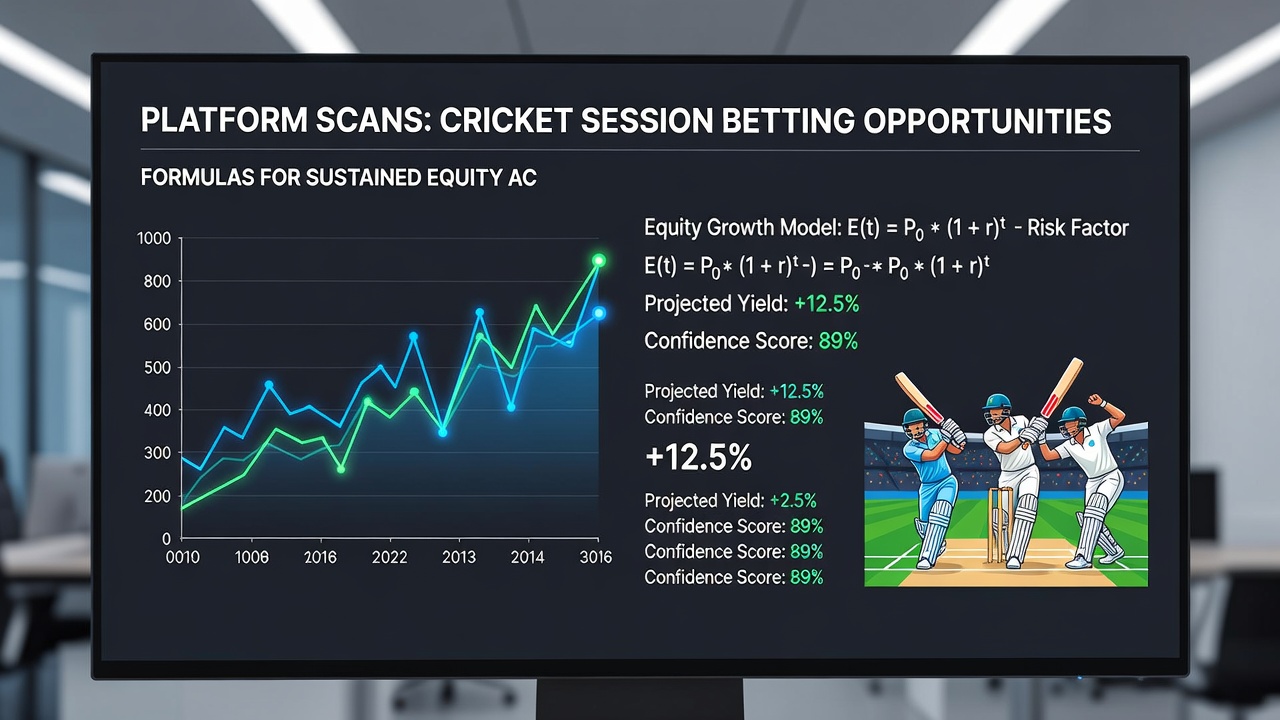
Aggregator systems compile odds from multiple operators and flag lines where the offered price exceeds a calculated fair value threshold, and observers note this process operates continuously during live play because session outcomes depend on variables like pitch wear and weather shifts that evolve quickly. Researchers at sports analytics centers have documented how scanners process ball-by-ball feeds alongside historical session averages, highlighting instances where over or under totals on runs or boundaries sit mispriced relative to updated models. In July 2026 several platforms expanded their cricket coverage to include more granular session props, allowing the same tools to surface opportunities in both bilateral series and franchise leagues without requiring manual cross-referencing.
Formulas Maintain Equity Across Sessions
Stake sizing formulas adapted from fractional Kelly criteria or proportionate allocation methods help preserve bankroll stability when bettors move through consecutive sessions. These approaches start with an edge estimate generated by the scanner, then scale the wager size to a fixed fraction of current capital so that a sequence of adverse results does not erode the overall roll below predefined thresholds. Analysts have shown through back-testing that applying a 0.5 Kelly multiplier across twenty-session samples reduces drawdown magnitude compared with flat staking, while still capturing cumulative profit when value persists. The formulas incorporate session-specific volatility inputs, such as expected run-rate variance, so that stake recommendations tighten automatically during high-uncertainty periods like rain-affected matches.
Practical Application in Live Markets
One documented workflow involves loading upcoming session markets into an aggregator at the start of each innings, reviewing flagged discrepancies, and feeding the edge percentage into a stake calculator that outputs a wager amount based on remaining bankroll. Bettors who follow this sequence report that equity curves remain smoother because the system avoids overexposure on any single session even when multiple value signals appear close together. External data from the Victorian Commission for Gambling and Liquor Regulation indicates that structured staking protocols correlate with lower incidence of rapid capital depletion among frequent participants in similar session-based products.
Regional Data and Market Context
Figures released by the Australian Gambling Research Centre in early 2026 show session betting volumes in cricket grew steadily alongside the adoption of aggregator tools, with participants citing improved visibility into line movement as a primary driver. The same reports note that operators in major cricket markets have introduced additional session props during the 2026 season, expanding the dataset available for scanner calibration. Those who monitor these developments observe that equity formulas become more robust when updated with fresh ball-by-ball statistics released after each series, because model inputs reflect current pitch and team performance trends rather than relying solely on multi-year averages.
Conclusion
Aggregator-driven identification of cricket session value combined with disciplined stake formulas provides a documented pathway for maintaining capital across repeated betting cycles. The approach relies on continuous data feeds and adaptive sizing rules that respond to both edge size and session volatility, producing measurable differences in drawdown patterns according to available research outputs. As platforms continue refining their cricket offerings, the same scanning and calculation methods remain applicable to new session markets without requiring structural changes to the underlying process.